Full diagnostic with readings
Manifold gauges, clamp meter, and multimeter readings on the compressor, capacitor, and contactor. We record superheat, subcooling, and amp draw so the repair is based on data, not a guess at which part failed.
When your house hits 84 degrees and the condenser hums but never kicks on, you need central air repair Milwaukie OR homeowners actually trust. ThermexaPro runs same-day diagnostics across Clackamas County, stocks the capacitors and contactors that fail most, and tells you the price before we start. We have served Milwaukie since 2023, and we treat every no-cool call like it is August.
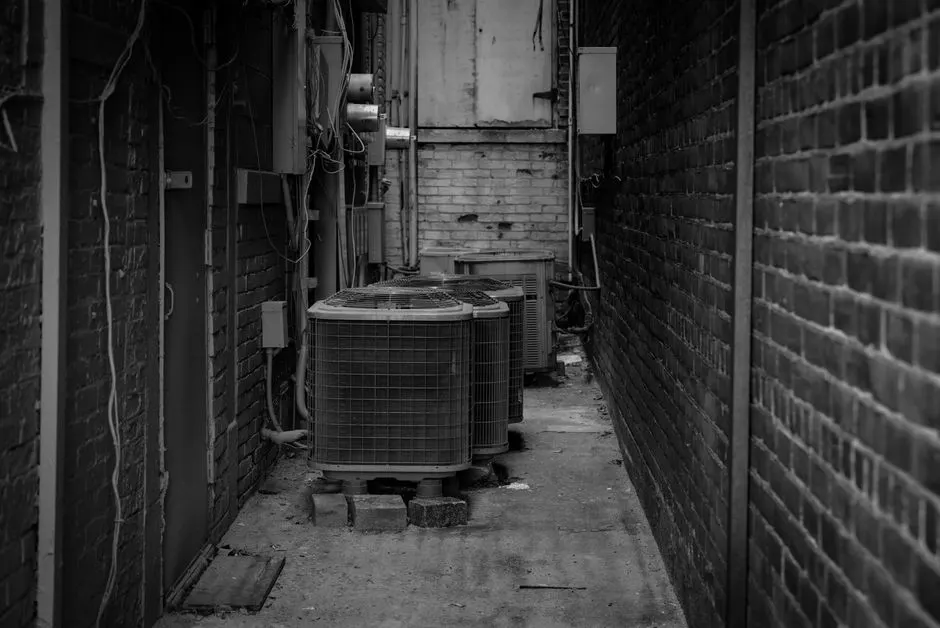
Central air repair Milwaukie OR is the diagnostic and mechanical work that restores a split-system air conditioner when it stops cooling, short-cycles, leaks water, or trips the breaker. A proper repair starts with readings, not guesses: manifold gauges on the service ports, a clamp meter on the compressor common wire, and a multimeter across the capacitor and contactor. From there we check the evaporator coil for frost, clear the PVC condensate line, and confirm the thermostat is actually calling for cool. Most no-cool calls trace back to one of five parts, and we identify which one before quoting anything.
Milwaukie summers now push past 95 degrees for days at a time, and the housing stock off Lake Road and in Hector Campbell is a mix of 1950s ranches and newer builds, so ductwork and equipment age vary wildly. When a system quits in that heat, the house turns into an oven by mid-afternoon. That is why we run 24/7 central AC repair in Milwaukie, with stocked trucks carrying R-410A refrigerant, capacitors, blower motors, and fin combs so the fix happens on the first visit.
Every central air repair Milwaukie OR visit covers the diagnostic work, the repair itself, and a full cooling-cycle test before we leave. Parts are quoted separately and approved by you first. Here is what is standard on the truck and in the scope.
Manifold gauges, clamp meter, and multimeter readings on the compressor, capacitor, and contactor. We record superheat, subcooling, and amp draw so the repair is based on data, not a guess at which part failed.
These two parts cause most no-cool calls. We stock them for Carrier, Trane, Lennox, Goodman, Rheem, and York condensers, so the swap usually happens on the first visit in under 45 minutes.
Nitrogen pressure testing and an electronic leak detector trace the leak, then we repair the joint or line and recharge with R-410A to the manufacturer's weight. R-22 systems get the same care where parts allow.
A clogged PVC condensate line backs water into the pan and shuts the system down. We clear the line, check the trap, and confirm flow so you are not mopping up a ceiling stain next week.
We pull the filter, inspect the evaporator coil for frost, and check static pressure. A dirty filter or a frozen coil mimics a refrigerant problem, and we rule those out before quoting a bigger repair.
Before we leave, we run a full cycle and confirm an 18 to 22 degree split between return and supply air. You get the numbers and a walkthrough of what was fixed and why it failed.
You call (855) 947-9500 and describe the symptom: warm air, ice on the line, water on the floor, or a breaker that keeps tripping. We ask a few quick questions, give you a two-hour arrival window, and text you when the tech is on the way. No phone-tree runaround.
The tech pulls the thermostat, checks the air filter, and inspects the indoor coil and blower before heading outside. We photograph anything unusual so you can see what we see. This takes about 15 minutes and catches the cheap fixes before we dig into the refrigerant side.
Out at the condenser we hook up manifold gauges, clamp the compressor leads, and test the capacitor and contactor with a multimeter. Superheat and subcooling numbers tell us whether the charge is right or whether there is a refrigerant leak. This is where the real answer lives.
Once we know the failed part, we quote it, get your go-ahead, and fix it. Capacitor and contactor swaps take 30 to 45 minutes. A refrigerant leak search with nitrogen pressure testing and a recharge runs two to four hours depending on how hard the leak is to find.
We run the system for a full cooling cycle, confirm a 18 to 22 degree split between return and supply air, and check that the condensate drain is flowing. Then we show you the readings, hand you the invoice, and leave the work area cleaner than we found it.
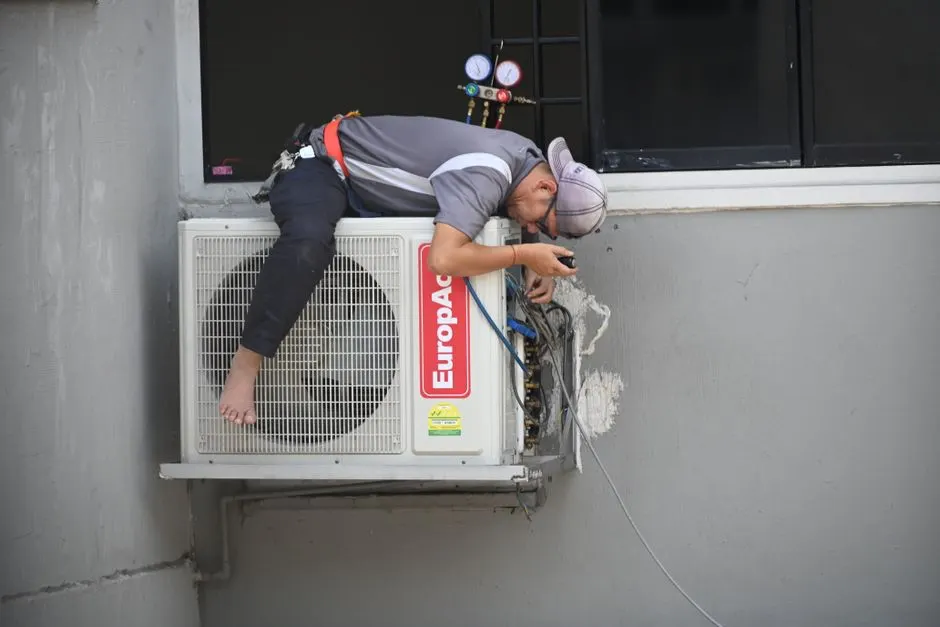
You call (855) 947-9500 and describe the symptom: warm air, ice on the line, water on the floor, or a breaker that keeps tripping. We ask a few quick questions, give you a two-hour arrival window, and text you when the tech is on the way. No phone-tree runaround.
Used to read high-side and low-side pressures at the service ports, which tells us whether the refrigerant charge is correct or whether there is a leak or restriction in the circuit.
The clamp meter reads amp draw on the compressor and fan motor; the multimeter tests capacitors, contactors, and thermostat wiring. Together they isolate electrical failures in minutes.
Sniffs out refrigerant leaks at braze joints, Schrader ports, and coil ends. We follow it with nitrogen pressure testing to confirm the leak location before we repair it.
The recovery machine pulls refrigerant out legally under EPA Section 608 rules, and the vacuum pump evacuates the line set to 500 microns before any recharge, which protects the compressor.
The fin comb straightens bent condenser fins to restore airflow, and the duct vacuum removes debris from the return side that would otherwise clog the evaporator coil again.
The tube bender shapes copper line sets during leak repairs without kinking them, and the insulated screwdriver set handles Nest and Ecobee thermostat wiring safely.
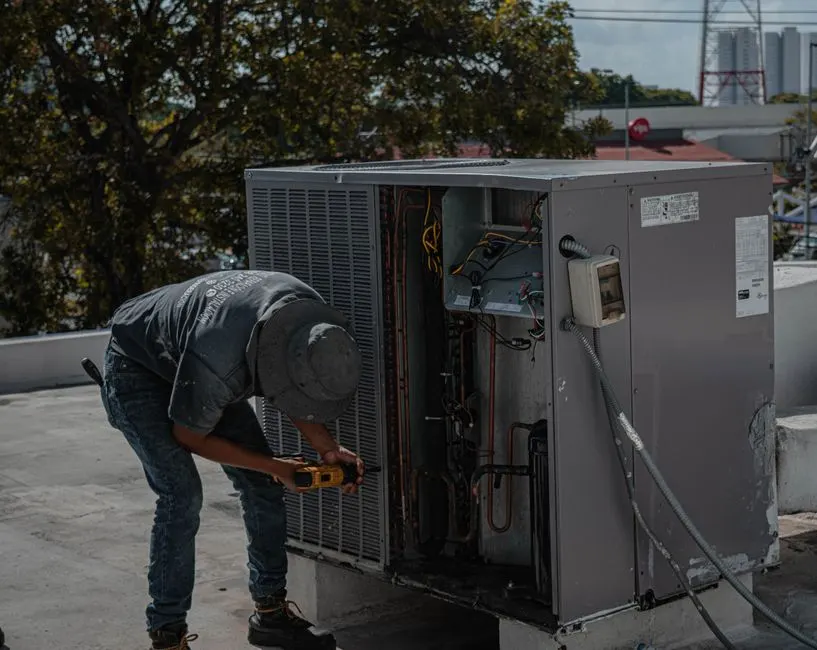
A Hector Campbell homeowner called at 11 a.m. with the house at 85 degrees and the condenser humming but the fan not spinning. The system had run nonstop since the previous evening, and the family had already reset the breaker twice with no change.
After: Our tech arrived by 1:30 p.m., tested the capacitor at 12 microfarads against a 35-rated part, and replaced it in 30 minutes. The fan and compressor started cleanly, amp draw returned to spec, and the house was back to 73 degrees by 4 p.m. Total cost: $240.
Book this service →
A Linwood homeowner had two prior companies add refrigerant without finding the leak. The system would cool for three weeks, then blow warm again. The line set ran through a crawlspace with visible corrosion near a braze joint.
After: We pressure-tested the circuit with nitrogen, found a pinhole at the braze joint, repaired it, evacuated to 500 microns, and recharged with R-410A by weight. Subcooling landed at 10 degrees, right in spec. The system held its charge through the rest of the summer.
Book this service →
A North Clackamas family reported warm air and a system that ran constantly. The evaporator coil was frozen into a solid block, and the filter had not been changed in over a year. The blower motor was drawing above nameplate amps.
After: We thawed the coil, replaced the filter, and swapped the failing blower motor. Static pressure dropped from 0.9 to 0.5 inches of water column, and the temperature split returned to 20 degrees. The upstairs finally cooled below 74 degrees on a 94-degree day.
Book this service →Most no-cool calls come down to a handful of failures. Here are the ones we see most in Milwaukie, what happens if you ignore them, and how we fix them.
Ask a pro →We test the capacitor and contactor first, since those cause most warm-air calls. If both check out, we move to the refrigerant side with gauges and look for a leak. Most warm-air repairs are done the same visit for $180 to $450.
Common causes are an oversized system, a failing capacitor, or a refrigerant charge that is off. We measure runtime, amp draw, and superheat to isolate it, then repair the root cause instead of replacing parts until something works.
We clear the PVC condensate line, check the trap and pan, and confirm the slope is correct. If the line keeps clogging, we install a float switch so the system shuts off before it overflows again.
We shut the system down, thaw the coil, and find the cause, usually a dirty filter, a failing blower motor, or a low charge. Then we replace the filter, test the blower, and verify the charge before restarting.
Most central air repairs in Milwaukie run $180 to $650 in 2026, depending on the failed part. A capacitor or contactor swap sits at the low end; a blower motor or refrigerant leak repair pushes toward the top. Diagnostic fees are credited toward the repair when you approve the work, so you are not paying twice for the same visit.
ThermexaPro repairs central air across Milwaukie and Clackamas County, with NATE-certified techs and EPA Section 608 credentials. We service Carrier, Trane, Lennox, Goodman, Rheem, York, Mitsubishi Electric, and Daikin equipment. Call (855) 947-9500 and we will give you a two-hour arrival window, usually same day.
Yes. We run 24/7 central AC repair in Milwaukie through the cooling season, including nights and weekends. If your system quits during a heat wave and the house is climbing past 80 degrees, call (855) 947-9500 and a live dispatcher will get a tech routed to you. After-hours pricing matches our daytime rates.
The four most common causes we find are a failed capacitor, a stuck contactor, a clogged air filter choking airflow, and a refrigerant leak. A frozen evaporator coil from a dirty filter is another frequent one. Each has a different fix, which is why we test with gauges and a multimeter instead of guessing at parts.
Call (855) 947-9500 and we will give you a two-hour arrival window, usually same day. NATE-certified techs, stocked trucks, upfront pricing, and a repair-first approach. If your AC is blowing warm, do not wait for the next heat wave.
Book a Repair (855) 947-9500 →Call (855) 947-9500 any time, day or night, and a live dispatcher will get a tech headed your way. Regular office hours run 8 a.m. to 6 p.m. Monday through Friday, with 24/7 emergency coverage for no-heat and no-cool calls. You can also email [email protected] and we will reply the same business day.